
Development and testing teams need realistic data to catch real defects. Yet copying production data into lower environments is one of the fastest ways to create a preventable privacy incident. OWASP’s guidance on data protection in non-production environments is blunt: avoid propagating unsanitised production data into lower environments. That practical tension—realism versus risk—is where format-preserving encryption (FPE) becomes genuinely useful. In a data analytics course, you may learn the theory of encryption; in day-to-day delivery, the harder question is how to keep data “usable” for testing without keeping it “identifying”.
1) Why basic masking often fails in development environments
Traditional masking methods include redaction (XXXX), truncation, shuffling, and substitution. They can protect data, but they often break applications:
- A payment screen may validate a card number’s length and pattern.
- A CRM may require phone numbers to match a country format.
- A legacy system may enforce fixed-width identifiers and reject “random strings”.
When masking breaks validation rules, teams either weaken test coverage (“we won’t test that flow”), or they quietly revert to copying real values. That is why data masking needs to be measured by two outcomes: privacy protection and functional realism.
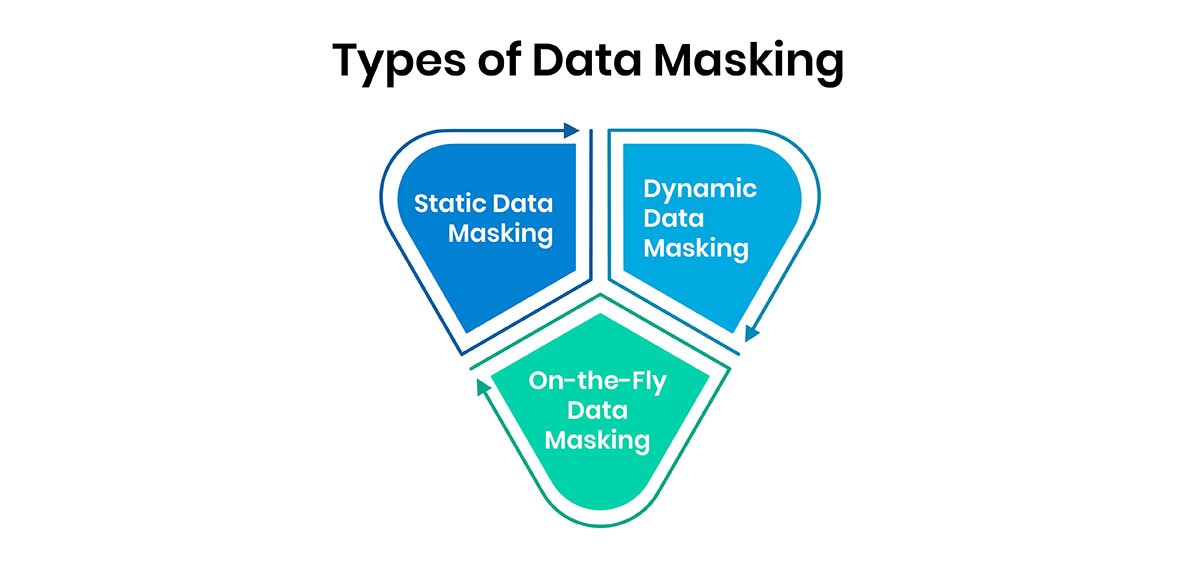
A useful working definition of data masking is creating “fake, but realistic” versions of organisational data so sensitive data is protected while the dataset remains functional for testing and training. FPE is one of the few techniques designed specifically to preserve that “functional” property.
2) What format-preserving encryption does differently
Format-preserving encryption encrypts data while keeping the output in the same format as the input—same length and character set, and often the same “shape” (for example, digits stay digits). This is especially helpful for fields that are heavily validated or used as join keys in downstream systems.
NIST’s SP 800-38G recommendation specifies approved methods for format-preserving encryption (such as FF1, and later revisions address FF3-1), implemented as modes of operation for an approved block cipher. In plain English: FPE is not “just scrambling characters”; it is encryption designed to keep the data looking like the original type of data.
A concrete example
- Input phone number: 9876543210
- FPE output: 4061789325
Both are 10 digits. Your application accepts it, test scripts work, but the output does not reveal the original number unless you have the key.
This is the kind of detail that matters in a data analytics course in Mumbai, where learners often see that data privacy is not only compliance—it is also engineering discipline that keeps delivery velocity intact.
3) Where FPE fits among masking, tokenisation, and “partial display” rules
It helps to separate three ideas that are often mixed up:
Masking for non-production use:
Goal is to create safe datasets for dev/test, analytics sandboxes, demos, and training. FPE is one method because it preserves formats and often preserves uniqueness.
Tokenisation:
Replaces a sensitive value with a random token and stores the mapping in a secure token vault. Tokenisation is strong when you need reversibility but want systems to avoid handling raw values. (Implementation details vary by product and architecture.)
Partial display masking (what users can see):
For payment card numbers (PAN), PCI guidance commonly requires masking when displayed (often allowing only the first six and last four digits to be visible for most roles). That is a “display rule”, not the same as protecting dev/test databases—but it shows how often formats matter in real systems.
In practice, teams combine techniques: tokenise the highest-risk identifiers, use FPE where applications require valid formats, and apply display masking in UIs.
4) How to implement FPE safely in dev/test without creating new risks
FPE can be misused. A solid implementation plan focuses on scope, keys, and verification.
- A) Decide what must be format-preserved
Use FPE for fields that must pass validation (cards, phones, national IDs, fixed-length customer IDs). For free-text fields (names, addresses), substitution or synthetic data may be safer and simpler. - B) Preserve relationships deliberately
Testing often needs consistent joins: the same customer ID should map to the same encrypted customer ID everywhere. FPE helps, but you must ensure the encryption is deterministic for that field in that environment (and not shared across environments if you want isolation). - C) Separate keys by environment and purpose
Never reuse production keys in lower environments. If dev and QA share keys, a leak in one becomes a leak in both. Treat keys like credentials: rotate them, restrict access, and log usage. - D) Test the masking, not just the application
Add automated checks:
- No raw PII appears in dev/test tables.
- Encrypted outputs match allowed formats.
- Uniqueness constraints still hold where required.
- Edge cases remain testable (nulls, unusual but valid values).
This controls an expensive risk. IBM’s Cost of a Data Breach Report 2024 cites a global average breach cost of USD 4.88 million. You do not need scare tactics to justify non-production protection; the economics are already clear.
Concluding note
Format-preserving encryption is best understood as a practical compromise: it protects sensitive data while keeping systems testable. The most effective teams treat dev/test privacy as a design requirement—choosing where FPE is necessary, combining it with other masking approaches, and enforcing key separation and validation checks. That mindset fits neatly with what a modern data analytics course should teach: not only how to analyse data, but how to handle it responsibly. And for practitioners applying these ideas locally and at scale, a data analytics course in Mumbai can be a reminder that privacy and delivery speed are not opposites—when implemented well, they reinforce each other.
Business Name: Data Analytics Academy
Address: Landmark Tiwari Chai, Unit no. 902, 09th Floor, Ashok Premises, Old Nagardas Rd, Nicolas Wadi Rd, Mogra Village, Gundavali Gaothan, Andheri E, Mumbai, Maharashtra 400069, Phone: 095131 73654, Email: elevatedsda@gmail.com.